Curriculum overview (Year 3)
Year 3 Curriculum Overview
A clear, parent-friendly overview of typical Year 3 subjects and learning aims—delivered through ETIA Academy’s calm, project-based approach.

How to use this page
This page gives a high-level overview of what many children typically cover in Year 3 (England). It’s designed to help home-educating families understand the breadth of learning—then see how ETIA Academy turns those aims into meaningful, flexible projects.
British National Curriculum (Year 3)
Typical Year 3 subject overview
Below is a parent-friendly snapshot of common Year 3 learning areas. Exact content varies by school and child—use this as a guide, not a checklist.
English
Reading comprehension (including inference), building vocabulary, writing for different purposes (stories, reports, letters), spelling patterns, handwriting, and speaking & listening skills.
Maths
Place value, addition/subtraction strategies, early multiplication and division, times tables practice, fractions basics, measurement (length/mass/capacity), time, and problem-solving.
Science
Working scientifically through investigations; common topics include plants, animals including humans, rocks, light, and forces & magnets.
Foundation subjects
History, Geography, Art & Design, Design & Technology, Computing, Music, PE, PSHE/RSHE, and Languages—often taught through themes and practical activities.
ETIA Academy academic curriculum
How ETIA Academy aligns (without the pressure)
ETIA Academy supports Year 3 learners with a project-based pathway that integrates core skills (English, Maths, Science) with wider curriculum areas (Humanities, Computing, Arts, PSHE). Children work at their own pace, building understanding through real-world themes—so learning feels connected, calm and purposeful.
British National Curriculum: Year 3 subjects (quick guide)
A simple breakdown of typical Year 3 subjects and what they often include.
History
Learning about the past through stories, sources and timelines (for example: local history, early civilisations, or significant events/people).
Geography
Map skills, local area studies, physical and human geography, weather/climate, and comparing places and environments.
Art & Design
Drawing, painting, sculpture and craft techniques; exploring artists and developing creativity and visual communication.
Design & Technology
Designing and making purposeful products; evaluating and improving; basic cooking and nutrition; using tools and materials safely.
Computing
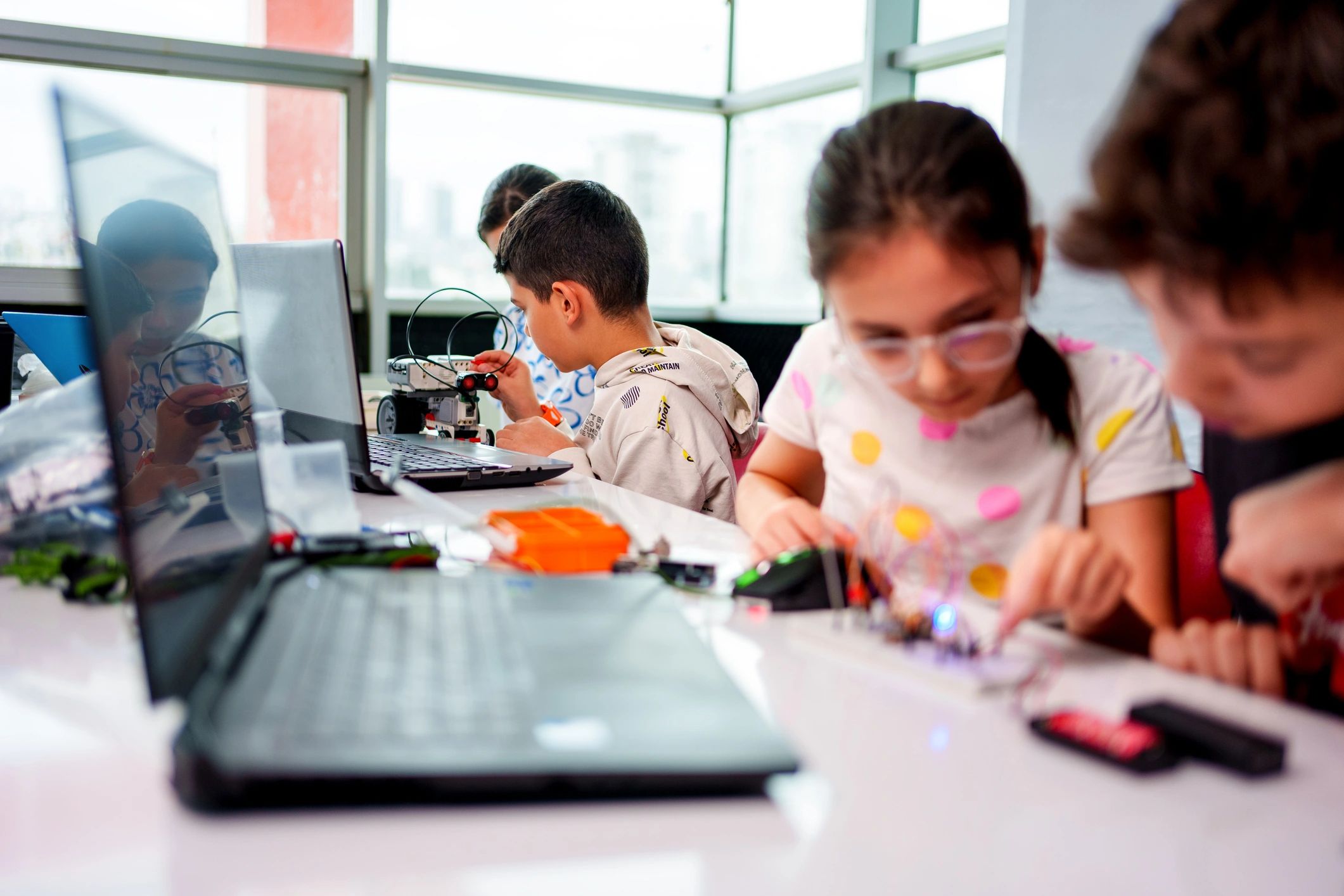
Using technology safely, creating and debugging simple programs, understanding networks in simple terms, and using digital tools to present work.
Music, PE, PSHE/RSHE & Languages
Music: singing, rhythm, notation basics. PE: coordination, games, dance, fitness. PSHE/RSHE: wellbeing, relationships, online safety. Languages: simple vocabulary and phrases (often French or Spanish).
Home education guidance (UK)
For official information on elective home education, visit the UK government guidance.
Important disclaimer
This overview is provided for general information only. ETIA Academy is not affiliated with the UK Department for Education, and this page does not reproduce the National Curriculum in full. If you need the official programmes of study, please refer to gov.uk.
How this works in practice
From curriculum aims to real projects
Instead of separating learning into isolated lessons, ETIA Academy uses projects that naturally combine skills—so children can practise, apply and remember what they learn.
Start with a theme
Children begin with an engaging theme (for example: sustainability, innovation, communities, or entrepreneurship) and explore it through questions and activities.
Build core skills daily
Reading, writing and maths are woven into projects—through research, journaling, measuring, data, budgeting, and problem-solving.
Create something meaningful
Learners produce real outcomes: presentations, models, posters, experiments, simple code, artwork, or a mini “business” idea—depending on the project.
Reflect and progress
Children reflect on what they’ve learned, celebrate progress, and move forward at a pace that supports confidence and understanding.
Ready to begin?
Explore ETIA Academy programmes for Key Stage 2
See how our self-paced, project-based courses support confident learning—without pressure.